
FREE SHIPPING ON UK ORDERS
No products in the cart.
Home » How Microbiome Testing Works: Science and Methodology
Understanding your gut microbiome begins with understanding how modern microbiome testing works. At Gut Health Test, we help people access laboratory-based microbiome testing services that analyse the bacteria living in the digestive system.
This page explains the science behind gut microbiome testing, how samples are analysed, and what the results can reveal about your digestive health.
The gut microbiome refers to the vast community of microorganisms living in the digestive tract. These microorganisms include bacteria, viruses, fungi, and other microbes that interact with the human body.
The gut microbiome plays an important role in several biological processes, including:
• Digestion of food and nutrients
• Production of certain vitamins and metabolites
• Immune system regulation
• Interaction with the gut lining and digestive system
Scientists estimate that the human gut contains trillions of microorganisms, forming a complex ecosystem that varies from person to person.
The composition and diversity of this microbiome can be influenced by many factors, including diet, lifestyle, medication use, and environmental exposures.

A gut microbiome test is a laboratory analysis that identifies the microorganisms present in a stool sample.
By analysing the genetic material of bacteria and other microbes in the sample, laboratories can determine:
• Which bacterial species are present
• The relative abundance of different microbes
• The overall diversity of the microbiome
This type of analysis helps create a detailed profile of the microbial community living in the digestive system.
Modern microbiome testing relies on advanced DNA sequencing technologies that allow laboratories to identify microorganisms with a high level of precision.
Rather than attempting to grow bacteria in laboratory cultures, which only detects a small portion of microbial species, modern testing methods analyse microbial DNA directly from the sample.
This allows laboratories to identify hundreds or even thousands of microbial species that may be present in the gut.
The most commonly used scientific techniques include:
• 16S rRNA gene sequencing
• Shotgun metagenomic sequencing
• Microbial DNA extraction and bioinformatics analysis
These methods allow scientists to analyse the genetic signatures of microorganisms and compare them with large microbial reference databases.

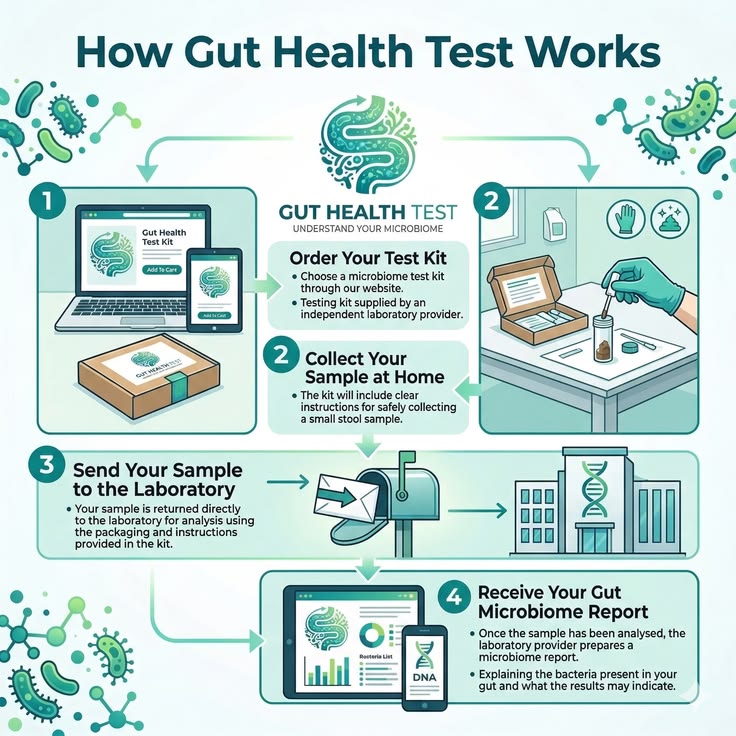
Customers order a microbiome testing kit through our platform. The kit is supplied by an independent laboratory provider that specialises in microbiome analysis.
The kit contains everything needed to collect a sample safely at home.
The testing kit includes clear instructions explaining how to collect a small stool sample.
The sample collection process is designed to be hygienic, simple, and safe for home use.
Once collected, the sample is sealed in the provided container.
The collected sample is returned directly to the laboratory using the packaging and return instructions included in the kit.
The laboratory then prepares the sample for microbiome analysis.
In the laboratory, scientists extract microbial DNA from the sample.
This DNA contains the genetic information of the microorganisms present in the gut microbiome.
Specialised laboratory techniques are used to isolate and prepare the DNA for sequencing.
The extracted DNA is analysed using advanced sequencing technology.
Sequencing allows the laboratory to identify specific microbial species by analysing genetic markers associated with different bacteria and microorganisms.
This step produces a large dataset containing information about the microbial population within the sample.
Once the DNA sequencing is complete, specialised software is used to interpret the data.
Bioinformatics tools compare the genetic sequences found in the sample with large microbial databases.
This process allows scientists to determine:
• Which bacteria are present
• The diversity of the microbiome
• The relative balance between microbial groups
Once the analysis is complete, the laboratory prepares a microbiome report.
This report typically includes information such as:
• Microbial diversity levels
• Bacterial groups identified in the gut
• Comparisons to reference populations
• General insights about microbiome balance
Reports are normally delivered digitally to the customer once the analysis has been completed.
One of the most important aspects of microbiome analysis is microbial diversity.
Diversity refers to the number of different microbial species present in the gut.
Many researchers believe that a diverse microbiome may be associated with a more resilient digestive ecosystem. However, the relationship between microbiome composition and health is still an active area of scientific research.
Microbiome testing helps provide a snapshot of the diversity and composition of your gut bacteria.
Gut bacteria perform several important biological functions within the digestive system.
These include:
• Breaking down complex carbohydrates and fibre
• Producing short-chain fatty acids
• Supporting immune system activity
• Interacting with the intestinal lining
Because of these functions, researchers are increasingly interested in understanding how the microbiome may influence digestive health and overall wellbeing.
Although microbiome testing provides valuable data about gut bacteria, it is important to understand that microbiome science is still evolving.
The microbiome is extremely complex, and researchers are still learning how microbial patterns relate to specific health outcomes.
Microbiome test results are therefore intended to provide informational insights rather than medical diagnoses.
Anyone with symptoms or health concerns should consult a qualified healthcare professional.
Gut Health Test helps customers access microbiome testing kits supplied by independent laboratory providers.
Our role is to make the process easier by providing:
• Access to microbiome testing kits
• Information explaining how microbiome testing works
• Support with enquiries about the testing process
The laboratory provider is responsible for:
• Sample analysis
• DNA sequencing
• Microbiome data interpretation
• Generating microbiome reports
If you are interested in learning more about gut health and microbiome science, our website provides additional educational resources covering topics such as:
• What the gut microbiome is
• Factors that influence gut bacteria
• Diet and lifestyle influences on the microbiome
• How microbiome testing works
Understanding your microbiome is an evolving area of science, and testing can offer valuable insights into the microbial ecosystem living within your digestive system.
If you would like to speak with us about your gut health or a test, feel free to contact us today.